

410 Girl Names That Mean Healing: Meanings, Origins & Inspiration
Girl names that mean healing include Althea (“healer”), Rafaela (“God has healed”), Shifa (“cure” in Arabic), Hygieia (the Greek goddess of health), and Sanjivani (a life-restoring herb from Indian epic tradition). Many also draw on peace, hope, and renewal, making them meaningful picks for baby girls, characters, and brands.
Have you ever met a name that felt like a deep breath? Girl names that mean healing do exactly that. They carry meanings of health, comfort, hope, and renewal, whether the root is a Greek goddess, a Hebrew blessing, or an Arabic word for cure. In this guide, we grouped 410 names by origin, so you can trace each meaning back to its language. Literal healing names come first. Names for peace, hope, and new beginnings follow. Use them for a baby, a character, or a brand.
Healing Goddess Names from Greek, Roman, Celtic & Norse Mythology
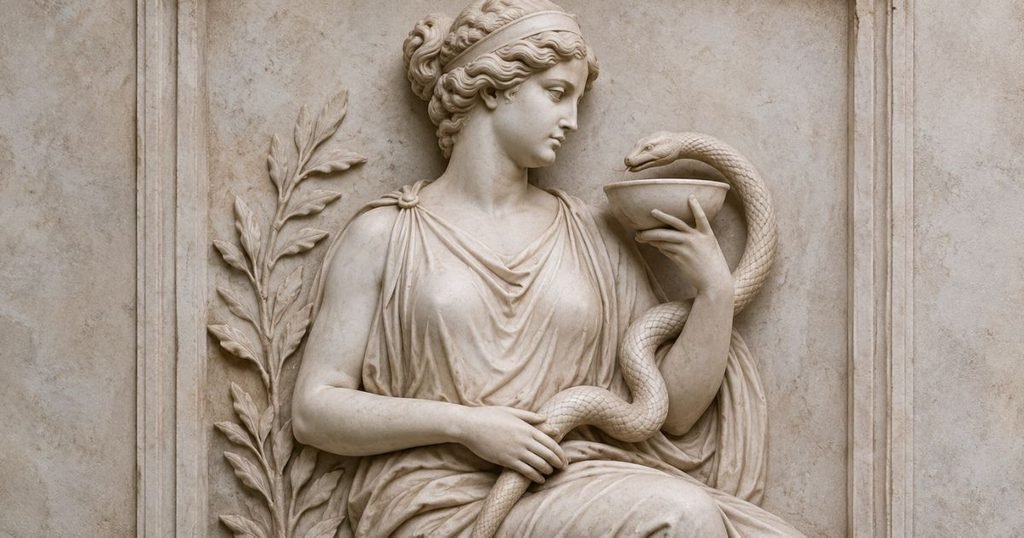
Medicine and myth grew up together. In ancient Greece, the god Asclepius was the divine physician, and his family carried out his work. His daughter Hygieia gave us the word “hygiene.” Apollo, his father, ruled both music and medicine. Roman, Celtic, and Norse cultures added healing goddesses of their own, often linked to springs, herbs, and holy wells. Names from these traditions sound rare and carry real history.
Greek & Roman Healing Names
- Althea (Greek) – “healer,” from the verb meaning “to heal”
- Aceso (Greek) – goddess of the healing process, daughter of Asclepius
- Iaso (Greek) – goddess of recovery from illness
- Hygieia (Greek) – goddess of health, source of the word “hygiene”
- Panacea (Greek) – “all-healing,” a daughter of Asclepius
- Epione (Greek) – goddess who soothed pain, wife of Asclepius
- Aegle (Greek) – “radiance,” goddess of glowing good health
- Meditrina (Roman) – goddess tied to the Latin verb “to heal”
- Salus (Roman) – goddess of health and well-being
- Angitia (Italic) – goddess of healing herbs and snakebite cures
- Carna (Roman) – goddess who guarded the body’s vital organs
- Valetudo (Roman) – personification of good health
- Soteria (Greek) – goddess of safety and deliverance from harm
- Jasone (Basque) – feminine form of Jason, whose root means “healer”
- Apollonia (Greek) – “of Apollo,” the god of medicine; a saint of that name is the patron of dentists
- Apolline (French) – the French form of Apollonia
What Girl Names Mean Healer in Greek?
Althea is the clearest answer, since its root literally means “to heal.” Aceso, Iaso, Hygieia, and Panacea come from Asclepius’ family of healing deities. Jasone and Apollonia connect to Greek words and gods of healing as well.
Celtic, Norse & Medieval Healing Names
The Celts honored healing at sacred springs. Brigid, the goddess and later saint of Kildare, is tied to holy wells across Ireland. Norse myth gave us Eir, listed in the Prose Edda as the finest of physicians.
- Brigid (Irish) – “exalted one,” goddess and saint linked to healing wells
- Brighid (Irish) – the older Gaelic spelling of Brigid
- Bridget (Irish) – the English form of Brigid
- Brigit (Irish) – a variant tied to the same healing goddess
- Bríd (Irish) – the short Irish Gaelic form of Brigid
- Bridie (Irish) – a friendly short form of Bridget
- Brigitte (French) – the French form of Brigid
- Birgit (Scandinavian) – a Nordic form of Brigid
- Brigitta (Swedish) – a Swedish form of Brigid
- Brita (Swedish) – a short Swedish form of Birgitta
- Brigida (Spanish/Italian) – the Romance-language form of Brigid
- Airmid (Irish) – mythic healer who gathered the herbs that grew from her brother’s grave
- Sirona (Gaulish) – Celtic goddess of healing springs
- Sulis (Celtic) – goddess of the hot spring at Bath
- Coventina (Romano-British) – goddess of a healing well near Hadrian’s Wall
- Sequana (Gaulish) – goddess of the Seine’s source and its healing shrine
- Damona (Gaulish) – goddess linked to healing springs
- Eir (Norse) – goddess of medical skill, “mercy, help”
- Idun (Norse) – keeper of the apples that kept the gods young
- Iduna (Norse) – the Latinized form of Idun
- Hlin (Norse) – goddess of protection and consolation
- Isolde (Arthurian) – heroine famed for healing skill; meaning uncertain
- Iseult (Arthurian) – the Old French form of Isolde
- Morgan (Welsh) – Morgen, the healer of Avalon in a 12th-century Arthurian poem
- Winifred (Welsh) – “blessed reconciliation,” tied to the healing well at Holywell
- Winnie (English) – a warm short form of Winifred
- Gwenfrewi (Welsh) – the original Welsh name of Saint Winifred
- Sláine (Irish) – “healthy, whole, safe,” from the Irish word slán
- Heddwen (Welsh) – “peace”
- Tangwen (Welsh) – “blessed peace”
- Helga (Norse) – “holy, blessed”; English “heal,” “whole,” and “holy” share an ancient root
- Heilwig (Germanic) – “healthy, whole” plus “battle”
You Can Also Read: 280+ Names That Mean Miracle or Blessing (With Origins and Meanings)
Biblical Girl Names That Mean Healing
Hebrew gives us the richest “healing” vocabulary. The word shalom means peace, but it also means wholeness, which is why many peace names double as healing names. The name Raphael means “God has healed,” and Archangel Raphael is the angel of healing in Jewish and Christian tradition.
What Name Means “God Has Healed”?
Raphael does. Its feminine forms, Rafaela and Raphaella, keep the meaning and are used across Europe and Latin America. The variants below, from Raffaella to Raefaela, are all rare but real spellings of the same root.
Hebrew & Biblical Names
- Rafaela (Hebrew) – “God has healed”
- Raphaella (Hebrew) – “God has healed”
- Raphaëlle (French) – “God has healed”
- Raffaella (Italian) – “God has healed”
- Rafaella (Hebrew) – a spelling variant of Rafaela
- Rafaelita (Spanish) – “little Rafaela,” God has healed
- Rafaelia (Hebrew) – an elaborate feminine form of Rafael
- Raphella (Hebrew) – “God heals”
- Rafelia (Hebrew) – a rare elaboration of Rafael
- Rafaila (Hebrew) – a feminine form derived from Raphael
- Rafiela (Hebrew) – a feminine variant of Rafael
- Raefaela (Hebrew) – a variant spelling of Rafaela
- Refaela (Hebrew) – the Hebrew-style spelling, “God has healed”
- Hadassah (Hebrew) – “myrtle,” a fragrant plant long used in folk remedies; Esther’s Hebrew name
- Salome (Hebrew) – from shalom, “peace, wholeness”
- Salomea (Polish) – the Polish form of Salome
- Shulamit (Hebrew) – “peaceful, whole”
- Shalva (Hebrew) – “tranquility, serenity”
- Shelomit (Hebrew) – “peaceful”
- Shalom (Hebrew) – “peace, wholeness”
- Menucha (Hebrew) – “rest, tranquility”
- Nechama (Hebrew) – “comfort”
- Nahama (Hebrew) – a variant of Nechama, “comfort”
- Nehama (Hebrew) – a variant of Nechama, “comfort”
- Tikvah (Hebrew) – “hope”
- Chaya (Hebrew) – “life, alive”
- Chava (Hebrew) – “life,” the Hebrew form of Eve
- Hava (Hebrew) – “life,” a variant spelling of Chava
- Azaria (Hebrew) – “God has helped”
- Selah (Hebrew) – a pause or rest in the Psalms; its exact meaning is debated
- Tabitha (Aramaic) – “gazelle”; Acts 9 tells of her restoration to life
- Bethesda (Hebrew) – “house of mercy,” the pool where the sick sought healing in John 5
- Siloam (Hebrew) – “sent,” a pool linked to a healing in John 9
- Balsam (Hebrew-rooted) – fragrant resin tied to the “balm in Gilead” of Jeremiah 8:22
Arabic, Persian & Turkish Girl Names That Mean Healing and Cure
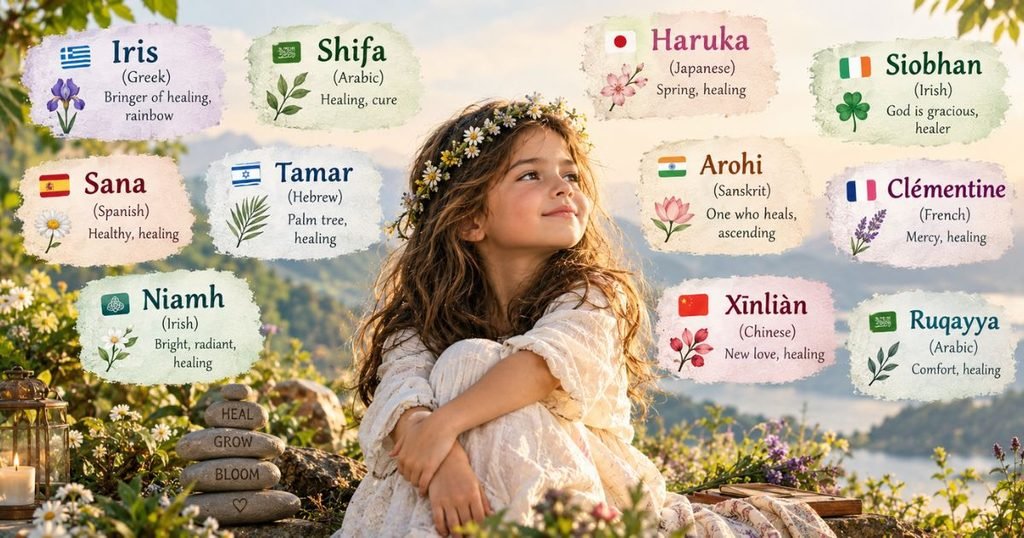
Arabic has dedicated words for healing, built on the root behind shifa (“cure”). Honey also holds a special place: the Qur’an says it holds healing for people (16:69), so Shahd and Asal carry that sense.
What Is the Arabic Name for Healing?
Shifa is the most direct answer, meaning “healing, cure, remedy.” Afiya means health and well-being. Shafiyyah and Shafyaa both mean “healer.”
Arabic, Persian, Turkish & Kurdish Names
- Shifa (Arabic) – “healing, cure, remedy”
- Sheefa (Arabic) – “healing, cure”
- Shafiyyah (Arabic) – “healer,” one who heals and cures
- Shafiya (Arabic) – a spelling variant meaning “healer”
- Shafia (Arabic) – a spelling variant meaning “healer”
- Shafyaa (Arabic) – “healer”
- Shafiyat (Turkish) – the Turkish form of Shafiyah, “healer”
- Afiya (Arabic) – “health, well-being”
- Aafiya (Arabic) – a variant spelling of Afiya
- Afiyah (Arabic) – a variant spelling of Afiya
- Afiyat (Arabic) – a variant meaning “health”
- Tabiba (Arabic) – “female physician”
- Tabeeba (Arabic) – a spelling variant of Tabiba
- Hakima (Arabic) – “wise,” feminine of hakim, a title for a wise physician
- Hakeema (Arabic) – a spelling variant of Hakima
- Jabira (Arabic) – “one who restores and comforts,” from a root meaning to set a bone
- Rufaida (Arabic) – Rufaida Al-Aslamia, remembered as the first Muslim nurse
- Salwa (Arabic) – “solace, comfort”
- Taskeen (Urdu) – “soothing, comfort”
- Rahat (Urdu/Arabic) – “relief, ease”
- Sakina (Arabic) – “tranquility, calm”
- Sakinah (Arabic) – “tranquility”
- Sakeena (Arabic) – a spelling variant meaning “serenity”
- Sukoon (Urdu) – “peace, stillness”
- Salima (Arabic) – “safe, sound, unharmed”
- Saleema (Arabic) – a spelling variant of Salima
- Salimah (Arabic) – a variant of Salima, “sound, whole”
- Salama (Arabic) – “safety, soundness”
- Salaam (Arabic) – “peace”
- Shahd (Arabic) – “honey,” a food the Qur’an links to healing
- Asal (Arabic) – “honey”
- Najat (Arabic) – “salvation, rescue, deliverance”
- Hayat (Arabic) – “life, vitality”
- Aisha (Arabic) – “alive, living, well”
- Ayesha (Arabic) – a common spelling of Aisha
- Ayşe (Turkish) – the Turkish form of Aisha
- Amina (Arabic) – “safe, trustworthy”
- Aminah (Arabic) – a variant spelling of Amina
- Ameena (Arabic) – a variant spelling of Amina
- Amal (Arabic) – “hope”
- Rajaa (Arabic) – “hope”
- Ruqayyah (Arabic) – linked to the root behind ruqyah, healing recitation
- Şifanur (Turkish) – “healing light,” from şifa plus nur
- Derman (Turkish) – “remedy, strength”
- Esen (Turkish) – “healthy, well, safe”
- Emine (Turkish) – “safe, trustworthy”
- Aramesh (Persian) – “calm, peace”
- Jiyan (Kurdish) – “life”
Spiritual Healing Names from India, Africa, Asia & the Pacific
Ayurveda, India’s traditional system of medicine, has shaped names for thousands of years. Sanskrit words such as arogya (freedom from disease) became names you can still hear today. Many other cultures keep similar words for health, life, and peace.
Sanskrit & South Asian Names
- Arogya (Sanskrit) – “freedom from disease, good health”
- Aarogya (Sanskrit) – a variant spelling of Arogya
- Anamaya (Sanskrit) – “free from illness”
- Niramaya (Sanskrit) – “free from sickness”
- Swasti (Sanskrit) – “well-being, good fortune”
- Swasthi (Sanskrit) – a variant spelling of Swasti
- Swasthya (Sanskrit) – “health”
- Ayushi (Sanskrit) – “long-lived,” from ayus, the root of “Ayurveda”
- Ayusha (Sanskrit) – “life, longevity”
- Ashvini (Sanskrit) – named for the Ashvins, the divine twin physicians of Vedic tradition
- Amrita (Sanskrit) – “nectar of immortality”
- Sanjivani (Sanskrit) – the life-restoring herb in the Ramayana
- Sanjeevani (Sanskrit) – a variant spelling of Sanjivani
- Tulsi (Hindi) – holy basil, revered in Ayurveda
- Brahmi (Sanskrit) – an Ayurvedic herb, also a name for the goddess Saraswati
- Chandana (Sanskrit) – sandalwood, used in cooling Ayurvedic remedies
- Shitala (Sanskrit) – “the cooling one,” a goddess invoked against fevers and pox
- Shanti (Sanskrit) – “peace”
- Shanta (Sanskrit) – “peaceful”
- Shantala (Kannada) – “peaceful”
- Sukhmani (Punjabi) – “jewel of peace”
- Santwana (Hindi) – “solace, consolation”
- Kshema (Sanskrit) – “well-being, safety, peace”
- Jeevika (Hindi) – “life, livelihood”
- Jiya (Hindi) – “heart, life”
- Tara (Sanskrit) – “star, one who ferries across”
- Amudha (Tamil) – “nectar”
- Madhu (Sanskrit) – “honey”
- Madhuri (Sanskrit) – “sweetness”
- Karuna (Sanskrit) – “compassion”
- Daya (Sanskrit) – “compassion, mercy”
- Kripa (Sanskrit) – “grace, compassion”
- Maitri (Sanskrit) – “loving-kindness”
- Metta (Pali) – “loving-kindness”

African, Asian, Pacific & Mesoamerican Names
- Afya (Swahili) – “health”
- Faraja (Swahili) – “comfort, consolation”
- Tumaini (Swahili) – “hope”
- Alafia (Yoruba) – “peace, health, well-being”
- Lafiya (Hausa) – “health, wellness”
- Philile (Zulu) – “she is well”
- Philisiwe (Zulu) – “the healed one”
- Phila (Zulu) – “live, be well”
- Nompilo (Zulu) – “mother of life and health”
- Nokuthula (Zulu) – “mother of peace and calm”
- Sindisiwe (Zulu) – “saved, rescued”
- Selam (Amharic) – “peace”
- Selamawit (Amharic) – “peaceful”
- Hiwot (Amharic) – “life”
- Oshun (Yoruba) – river orisha of sweet waters, love, and healing
- Ola (Hawaiian) – “life, health, well-being”
- Hoʻola (Hawaiian) – “to heal, to restore life”
- Maluhia (Hawaiian) – “peace, serenity”
- Ora (Māori) – “alive, well, healthy”
- Rongoā (Māori) – traditional Māori medicine
- Rangimarie (Māori) – “peace”
- Nagomi (Japanese) – “harmony, a soothing calm”
- Yasuko (Japanese) – “peaceful child” or “healthy child,” depending on the kanji
- Ning (Chinese) – “peaceful, tranquil”
- An (Chinese) – “peace, safe”
- Bình (Vietnamese) – “peace, calm”
- Ixchel (Maya) – goddess of medicine and midwifery
Latin, Romance & Slavic Names Meaning Health, Life and Restoration
Latin gave English the words “valid,” “salvation,” and “salubrious.” That is why Valeria (from a root meaning “to be strong and healthy”) and Reparata (“restored”) sit so naturally on this list. Spanish adds names like Remedios and Socorro that translate as “remedies” and “relief.” Slavic languages built names from zdrav, meaning “healthy.”
Latin, Spanish, Greek & Slavic Names
- Valeria (Latin) – “strong, healthy”
- Valerie (French) – “strong, healthy”
- Valentina (Latin) – “strong, healthy”
- Valencia (Latin) – “strength, vigor, health”
- Valeriana (Latin) – “healthy,” also the name of a calming herb
- Sana (Latin/Arabic) – Latin sana, “healthy, sound”; Arabic, “brilliance”
- Hale (English) – “healthy, whole,” from Old English hāl
- Salud (Spanish) – “health”
- Remedios (Spanish) – “remedies”
- Socorro (Spanish) – “help, relief”
- Consuelo (Spanish) – “consolation”
- Consolata (Italian) – “consoled, the consoler”
- Amparo (Spanish) – “shelter, protection”
- Piedad (Spanish) – “compassion, mercy”
- Mercedes (Spanish) – “mercies”
- Caridad (Spanish) – “charity, loving care”
- Clemencia (Spanish) – “mercy”
- Misericordia (Latin) – “compassion”
- Milagros (Spanish) – “miracles”
- Lourdes (Spanish) – a French pilgrimage town famed for healing waters
- Reparata (Latin) – “restored”
- Restituta (Latin) – “restored”
- Sotiria (Greek) – “salvation, deliverance”
- Galini (Greek) – “calm, serenity”
- Galene (Greek) – “calm,” from the Greek word for a still sea
- Vita (Latin) – “life”
- Vida (Spanish) – “life”
- Vitalia (Latin) – “vitality”
- Vivian (Latin) – “alive”
- Vivien (French) – “alive”
- Vivienne (French) – “alive”
- Viviana (Italian) – “alive”
- Zoe (Greek) – “life”
- Zoey (Greek) – a variant spelling of Zoe, “life”
- Zoi (Greek) – the modern Greek spelling, “life”
- Zoya (Slavic) – “life”
- Zdravka (Bulgarian/Serbian) – “healthy”
- Zdravena (Bulgarian) – “healthy”
- Zdrava (Slavic) – “healthy”
- Zhivka (Bulgarian) – “alive, lively”
- Zhiva (Slavic) – “alive,” linked to the goddess of life, Živa
- Eve (English) – “life,” from the Hebrew havvah
- Eva (Latin) – “life”
- Evie (English) – a friendly short form of Eve
- Evita (Spanish) – “little Eve,” little life
- Alma (Latin) – “nourishing, kind”
- Agatha (Greek) – “good”; Saint Agatha is a patron of nurses
- Dymphna (Irish) – meaning uncertain; patron saint of people with mental illness
- Dympna (Irish) – a short form of Dymphna
Girl Names That Mean Healing Through Hope, Peace, Renewal & Light
Healing is more than medicine. It’s the calm after a storm, the first morning after a long night, and the hope that comes back. Names that mean peace, hope, and dawn belong here because they describe recovery as people feel it. This section is wider than the literal healing names above, and every meaning is stated plainly.
Hope & Renewal
- Esperanza (Spanish) – “hope”
- Esperança (Portuguese) – “hope”
- Esperance (French) – “hope”
- Speranza (Italian) – “hope”
- Elpida (Greek) – “hope”
- Elpis (Greek) – the spirit of hope in Greek myth
- Asha (Sanskrit) – “hope, wish”
- Umeed (Urdu) – “hope”
- Nadezhda (Russian) – “hope”
- Nadezda (Czech/Serbian) – “hope”
- Nada (Slavic) – “hope” (in Arabic, “dew”)
- Nadia (Russian) – “hope”
- Nadya (Russian) – a short form of Nadezhda, “hope”
- Nadine (French) – “hope”
- Hope (English) – “hope”
- Renata (Latin) – “reborn”
- Renate (German) – “reborn”
- Renée (French) – “reborn”
- Anastasia (Greek) – “resurrection, rebirth”
- Anastasie (French) – “resurrection”
- Nastasia (Slavic) – “resurrection”
- Nastya (Russian) – a pet form of Anastasia
- Stasia (Slavic) – a short form of Anastasia
- Tasya (Russian) – a short form of Anastasia
- Phoenix (Greek) – the mythic bird reborn from its ashes
- Fenice (Italian) – “phoenix”
- Aviva (Hebrew) – “springtime, freshness”
- Aurora (Latin) – “dawn”
- Dawn (English) – “daybreak”
- Eos (Greek) – goddess of the dawn
- Zarya (Slavic) – “dawn”
- Ostara (Germanic) – spring goddess
- Primavera (Italian) – “spring”
- Vesna (Slavic) – “spring”
Peace, Comfort & Calm
- Irene (Greek) – “peace”
- Irena (Slavic) – “peace”
- Irini (Greek) – “peace”
- Eirini (Greek) – “peace”
- Eirene (Greek) – “peace,” goddess of peace
- Irina (Russian) – “peace”
- Frida (Germanic) – “peace”
- Frieda (German) – “peace”
- Freda (English) – “peace”
- Frederica (Germanic) – “peaceful ruler”
- Mira (Slavic) – “peace, world”
- Mirna (Croatian) – “peaceful”
- Miroslava (Slavic) – “peace and glory”
- Rauha (Finnish) – “peace”
- Paz (Spanish) – “peace”
- Paloma (Spanish) – “dove,” a symbol of peace
- Pacifica (Latin) – “peacemaking”
- Placidia (Latin) – “calm, gentle”
- Placida (Latin) – “calm, gentle”
- Serena (Latin) – “calm, clear”
- Serenity (English) – “calm, peace of mind”
- Harmony (English) – “agreement, concord”
- Halcyon (Greek) – “calm, peaceful days”
- Solace (English) – “comfort in sorrow”
- Comfort (English) – “ease, consolation”
- Haven (English) – “safe harbor”
- Mercy (English) – “compassion, forgiveness”
- Clementine (Latin) – “mild, merciful”
- Clemence (French) – “mercy, mildness”
- Bliss (English) – “deep happiness”
- Amity (English) – “friendship, goodwill”
- Olive (Latin) – the olive branch of peace
- Mehr (Persian) – “kindness, love”
- Hanan (Arabic) – “tenderness, compassion”
- Rahma (Arabic) – “mercy”
- Mildred (English) – “gentle strength”
- Mila (Slavic) – “gracious, dear”
Light & New Beginnings
- Lucy (Latin) – “light”
- Lucia (Latin) – “light”
- Luz (Spanish) – “light”
- Lucinda (Latin) – “light”
- Lucille (French) – “light”
- Nur (Arabic) – “light”
- Noor (Arabic) – “light”
- Liora (Hebrew) – “I have light”
- Eliora (Hebrew) – “my God is light”
- Uriela (Hebrew) – “God is my light”
- Zahra (Arabic) – “radiant”
- Zora (Slavic) – “dawn”
- Usha (Sanskrit) – “dawn”
- Sahar (Arabic/Persian) – “dawn”
- Subha (Sanskrit) – “morning, auspicious”
- Prabha (Sanskrit) – “light, radiance”
- Deepa (Sanskrit) – “lamp”
- Jyoti (Sanskrit) – “light, flame”
- Roshni (Hindi/Urdu) – “light”
- Kiran (Sanskrit) – “ray of light”
- Svetlana (Slavic) – “light”
- Phoebe (Greek) – “bright, radiant”
- Claire (French) – “clear, bright”
Nature-Inspired Healing Names: Herbs, Flowers, Honey & Stones
Plants were the first medicine cabinet. Hildegard of Bingen, the 12th-century abbess and writer, recorded the medicinal uses of plants in her natural history. Many plant names make lovely baby names today. Stones like amethyst and jade carry folk beliefs about healing. They are included for their cultural meaning, not as medical claims.
Herb, Flower, Honey & Stone Names
- Sage (Latin) – an herb whose name comes from a root meaning “safe, healthy”
- Salvia (Latin) – the sage plant, from the Latin word for “to save, heal”
- Melissa (Greek) – “honeybee,” also the botanical name for lemon balm
- Lavender (English) – a calming herb and fragrance
- Rosemary (Latin) – “dew of the sea,” a classic culinary and folk herb
- Chamomile (Greek) – “earth apple,” a flower brewed as soothing tea
- Calendula (Latin) – a golden flower used in skin salves
- Marigold (English) – “Mary’s gold,” the common name of calendula
- Aloe (Greek) – the succulent used for soothing burns
- Arnica (Greek) – a mountain flower used in bruise creams
- Verbena (Latin) – sacred leaves used in ancient rites and herbal teas
- Fennel (Latin) – an aromatic herb used for digestion
- Hyssop (Greek) – a cleansing herb of the Bible
- Yarrow (English) – the plant behind Achillea, said to be used by Achilles on wounds
- Willow (English) – a tree whose bark gave us the pain-relieving compound salicin
- Rowan (Gaelic) – the “little red one,” a protective tree in Celtic folklore
- Hawthorn (English) – a thorny tree long used in heart tonics
- Elder (English) – the elderberry tree of folk remedies
- Juniper (Latin) – an evergreen used in traditional medicine
- Myrrh (Semitic) – “bitter,” a resin used in ancient medicine
- Jasmine (Persian) – “gift from God,” a flower used in aromatherapy
- Peony (Greek) – named for Paeon, the physician of the gods
- Paeonia (Greek) – the botanical name of the peony
- Angelica (Latin) – “angelic,” an herb once used against illness
- Betony (Latin) – a medieval herb prized in remedy books
- Thyme (Greek) – an herb whose oil has antiseptic properties
- Mallow (English) – a plant whose root soothes sore throats
- Linden (English) – the lime tree, whose flowers are brewed for colds
- Rue (Greek) – “herb of grace,” used in historic medicine
- Ginger (English) – a spicy root used for nausea
- Saffron (Persian) – the prized spice from crocus stamens
- Laurel (Latin) – Apollo’s sacred tree
- Daphne (Greek) – “laurel,” the nymph tied to Apollo’s tree
- Honey (English) – nature’s sweetener, used on wounds for centuries
- Melita (Greek) – “honeybee”
- Melina (Greek) – “honey”
- Ambrosia (Greek) – the food of the gods that gave immortality
- Amethyst (Greek) – “not intoxicated,” a crystal prized in folk healing traditions
- Jade (English) – a stone treasured in Chinese culture for health and protection
- Amber (Arabic) – fossil resin worn in folk tradition
Names Inspired by Famous Healers and Medical Pioneers
Another way to honor healing is to name a daughter after a woman who changed medicine. Florence Nightingale founded modern nursing training in the 1860s. Clara Barton started the American Red Cross in 1881. The names below are linked to real women, each noted in a short line.
Names of Women Who Healed
- Florence (Latin) – “flourishing”; Florence Nightingale pioneered modern nursing
- Clara (Latin) – “clear, bright”; Clara Barton founded the American Red Cross
- Edith (English) – “prosperous in war”; Edith Cavell was a WWI nurse who trained nurses
- Mary (Hebrew) – Mary Seacole nursed soldiers during the Crimean War
- Elizabeth (Hebrew) – Elizabeth Blackwell was the first woman to earn a medical degree in the U.S.
- Cicely (Latin) – Cicely Saunders founded the modern hospice movement
- Virginia (Latin) – Virginia Apgar created the Apgar newborn score
- Marie (Hebrew) – Marie Curie built mobile X-ray units in WWI
- Susan (Hebrew) – “lily”; Susan La Flesche Picotte was the first Native American woman to earn a medical degree
- Rebecca (Hebrew) – Rebecca Lee Crumpler was the first Black woman in the U.S. to earn an MD
- Hildegard (Germanic) – Hildegard of Bingen wrote on medicine and herbs
- Trotula (Italian) – tied to Trota of Salerno, a 12th-century medical practitioner
- Elsie (Scottish) – Elsie Inglis founded the Scottish Women’s Hospitals
- Anandi (Sanskrit) – “joy”; Anandibai Joshi was among the first Indian women to earn a Western medical degree
- Ruth (Hebrew) – “compassion, friend”; Ruth Pfau devoted her life to treating leprosy in Pakistan
- Lillian (Latin) – “lily”; Lillian Wald founded public health nursing in New York
- Dorothea (Greek) – “gift of God”; Dorothea Dix reformed care for the mentally ill
- Sophia (Greek) – “wisdom”; Sophia Jex-Blake helped open medicine to women in Britain
- Linda (Spanish) – “beautiful”; Linda Richards was the first professionally trained American nurse
- Hazel (English) – “hazel tree”; Hazel Johnson-Brown led the U.S. Army Nurse Corps
- Eliza (English) – Mary Eliza Mahoney was the first African American professionally trained nurse
- Dorothy (Greek) – “gift of God”; Dorothy Hodgkin mapped the structures of penicillin and vitamin B12
- Ida (Germanic) – Ida Scudder founded the Christian Medical College in Vellore, India
- Emily (Latin) – Emily Blackwell helped found a New York infirmary for women
- Helen (Greek) – Helen Taussig founded pediatric cardiology
- Alice (Germanic) – “noble”; Alice Ball developed a pioneering leprosy treatment
- Nawal (Arabic) – “gift”; Nawal El Saadawi was an Egyptian physician and writer
- Youyou (Chinese) – Tu Youyou won the 2015 Nobel Prize for artemisinin
- Rosalyn (Latin) – Rosalyn Yalow shared the 1977 Nobel Prize for radioimmunoassay
- Françoise (French) – Françoise Barré-Sinoussi shared the 2008 Nobel Prize for discovering HIV
- Katalin (Hungarian) – Katalin Karikó shared the 2023 Nobel Prize for mRNA research
- Özlem (Turkish) – “wish, longing”; Özlem Türeci co-founded BioNTech
- Sarah (Hebrew) – Sarah Gilbert led work on the Oxford vaccine
- Mae (English) – Mae Jemison is a physician and the first African American woman in space
- Joycelyn (English) – Joycelyn Elders was the first Black U.S. Surgeon General
- Antonia (Latin) – Antonia Novello was the first woman and first Hispanic U.S. Surgeon General
You May Also Read: Names That Mean Phoenix: 340+ Fiery Picks With Meanings and Origins.
Final Thoughts
Girl names that mean healing carry comfort, hope, and a link to the oldest human work: caring for one another. From Althea and Rafaela to Shifa, Sanjivani, and Sláine, these 410 names give you a real story to tell. Bookmark the list, share it with someone choosing a name, or leave a comment with your favorite. We’d love to hear which one you picked.
FAQs
What is a good girl name that means healing?
Althea is a strong choice, since its root means “healer.” Shifa means “cure” in Arabic, Rafaela means “God has healed” in Hebrew, and Hygieia is the Greek goddess of health. Pick the one whose origin and sound fit your family best.
What girl names mean healer in Greek?
Althea means “healer.” Aceso, Iaso, Panacea, and Hygieia come from the family of Asclepius, the Greek god of medicine. Aegle means “radiance” and was a goddess of good health, and Apollonia honors Apollo, the god tied to healing.
What is the Arabic name for healing?
Shifa is the most direct Arabic name for healing, meaning “cure” or “remedy.” Afiya means health and well-being, while Shafiyyah and Shafyaa both mean “healer.” Shahd and Asal mean honey, which Islamic tradition links to healing.
What name means “God has healed”?
Raphael means “God has healed.” Feminine forms include Rafaela, Raphaella, Raffaella, and Refaela. Archangel Raphael is the angel of healing in Jewish and Christian tradition, which is why this name family is so popular.
How do you choose a meaningful healing name for your daughter?
Start with the meaning you want: health, peace, hope, or renewal. Then check the origin, say the name aloud with your surname, and confirm the meaning in more than one source. A tribute to a healer, like Florence or Cicely, can add personal meaning.